

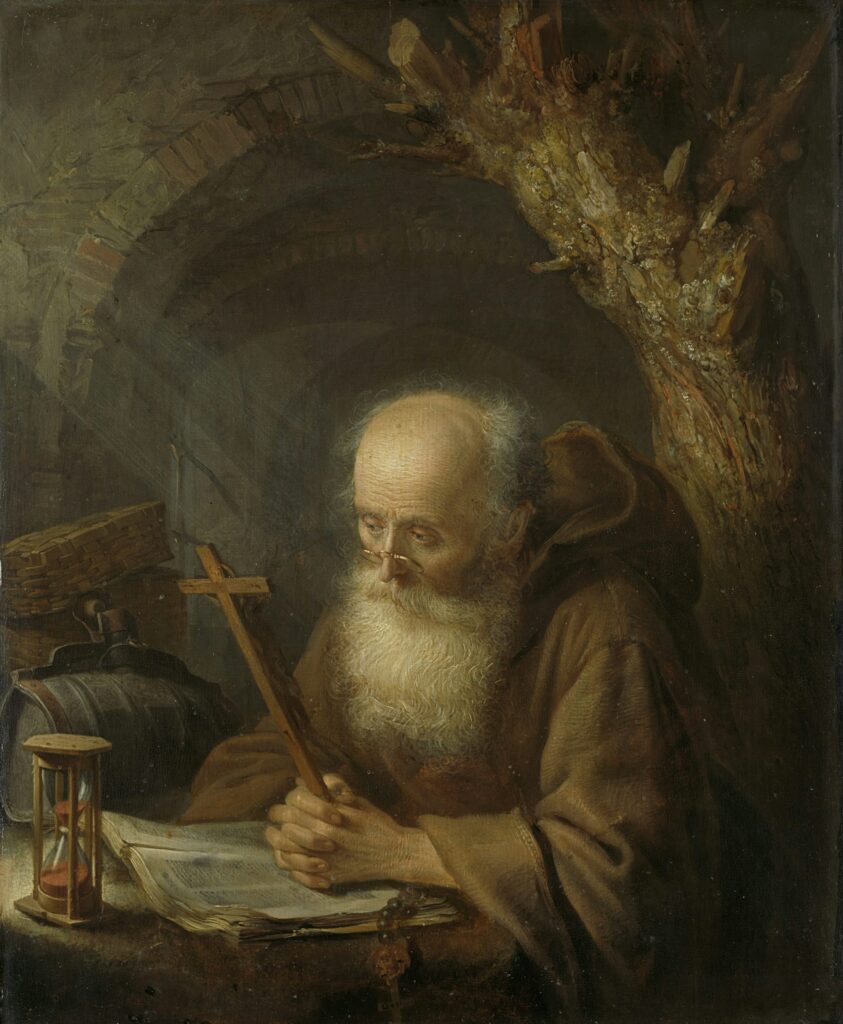
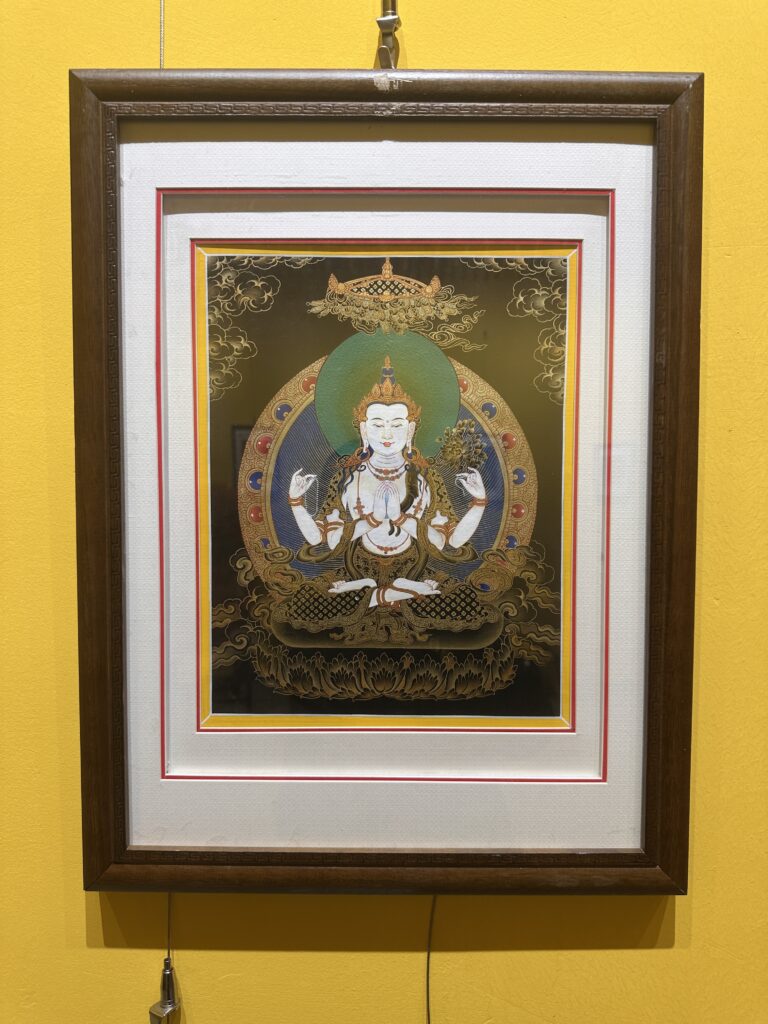
I used to think Tibetan thangka and Christian paintings belonged to completely different worlds.
One comes from Himalayan Buddhist culture. The other belongs to European churches, chapels, and museums. One is filled with Buddhas, bodhisattvas, mandalas, and ritual symbols. The other shows Christ, the Virgin Mary, saints, angels, and biblical stories.
Different religions. Different histories. Different visual styles.
But after looking more closely, I realised they are trying to answer a surprisingly similar question:
How do you paint something that cannot be seen?
God. Enlightenment. Compassion. Salvation. Suffering. Holiness.
These are not easy things to show with colour and line. Yet both Tibetan thangka and Christian religious painting try to make the invisible world visible.
What Makes Tibetan Thangka and Christian Paintings Comparable?
A thangka is often described as a Tibetan Buddhist scroll painting, usually made on cloth or silk. It may show a Buddha, a bodhisattva, a protective deity, a mandala, or a religious story. But this simple definition does not fully explain what a thangka does.
So a thangka is not only something to look at. It is something to use. It helps the viewer focus the mind. It gives shape to a spiritual order. It turns Buddhist ideas into a visible form.
This is why treating thangka only as “beautiful Asian art” misses the point. Its beauty matters, but its religious function matters more.
Christian Paintings Also Had a Job to Do
European Christian paintings were not created only for museum walls. Many of them were made for churches, chapels, altars, manuscripts, and private devotion.
In medieval and Renaissance Europe, paintings of Christ, the Virgin Mary, saints, and biblical scenes helped people remember sacred stories and enter into worship.The Metropolitan Museum of Art explains that images from the life of Christ were meant to deepen both communal and individual worship. Getty also notes that paintings and manuscripts from the Middle Ages into the Renaissance were created to aid Christian devotion.
This is where thangka and Christian painting begin to meet.
Both traditions use images as a bridge between the human world and the sacred world. They are not just visual objects. They are devotional tools.
Both Traditions Use Symbols Like a Language
A thangka is full of symbols. Colours, gestures, lotus seats, ritual objects, body positions, and mandala structures all carry meaning. Rubin Museum’s Project Himalayan Art explains that sacred figures in thangka painting are governed by strict rules of proportion, known as iconometry, and that colours are also shaped by iconographic conventions.
This means a thangka can be “read”. The viewer is not only seeing a figure. The viewer is reading a spiritual map.
Christian painting works in a similar way. A halo suggests holiness. A lamb can point to Christ. A lily may suggest purity. Light often carries spiritual meaning. Britannica defines a halo as a radiant circle or disk around the head of a holy person, representing spiritual character through light.
So the connection is not that thangka and Christian paintings look the same. They do not.
The connection is that both traditions use visual symbols to teach religious meaning.
They Both Make the Sacred Feel Close
One reason religious images are powerful is that they make distant ideas feel near.
A Buddhist practitioner looking at a thangka is not simply looking at a painted figure. The image can become a focus for meditation and devotion. A Christian worshipper looking at a painting of the Crucifixion or the Madonna is also not simply looking at decoration. The image can invite prayer, memory, grief, hope, or love.
This matters because religion is not only about doctrine. It is also about attention. Where do you place your eyes? What do you return to again and again? What kind of image teaches you how to feel?
Thangka and Christian paintings both answer these questions visually.
They train the eye. They guide emotion. They make belief easier to imagine.
But They Are Not the Same
The comparison has limits.
Thangka is usually more closely tied to fixed religious rules. The proportions, colours, gestures, and attributes of sacred figures often follow established Buddhist iconographic systems. The painter’s personal creativity exists, but it usually works inside inherited religious rules.
European Christian painting, especially from the Renaissance onward, moved more strongly toward realism, perspective, anatomy, emotional expression, and the individual style of the artist. The image still served religion, but it also became a space for artistic invention.
This difference is important.
If we judge thangka by Renaissance standards of realism, we misunderstand it. Thangka is not trying to make the sacred look like ordinary physical reality. It is trying to show a spiritual order.
And if we call Christian painting simply “Western thangka”, we also go too far. Christian painting developed within its own religious, social, and artistic world.
They are comparable. They are not interchangeable.
Why This Comparison Matters
Putting thangka beside Christian painting helps us see both more clearly.
It reminds us that religious art is not just about style. It is about use. It is about how people look, pray, remember, and imagine.
A thangka and a Christian painting may come from different worlds, but both ask a similar question:
How can an image bring the sacred closer to human life?
That is why they have more in common than we might first think.
Not because Buddhism and Christianity are the same.
Not because thangka and European painting share one artistic origin.
But because human beings, across cultures, have repeatedly turned to images when words are not enough.
Sometimes, to understand the invisible, we first need something to look at.